Liban Quarry. A Place That Remembers More Than It Lets You See
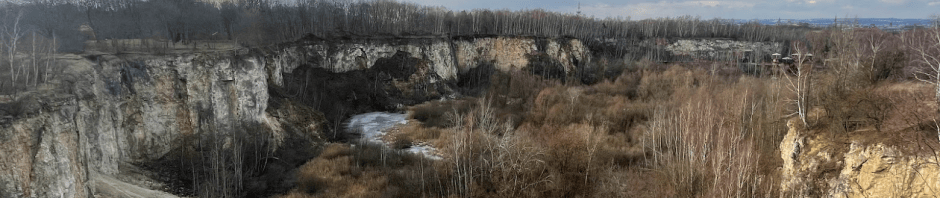
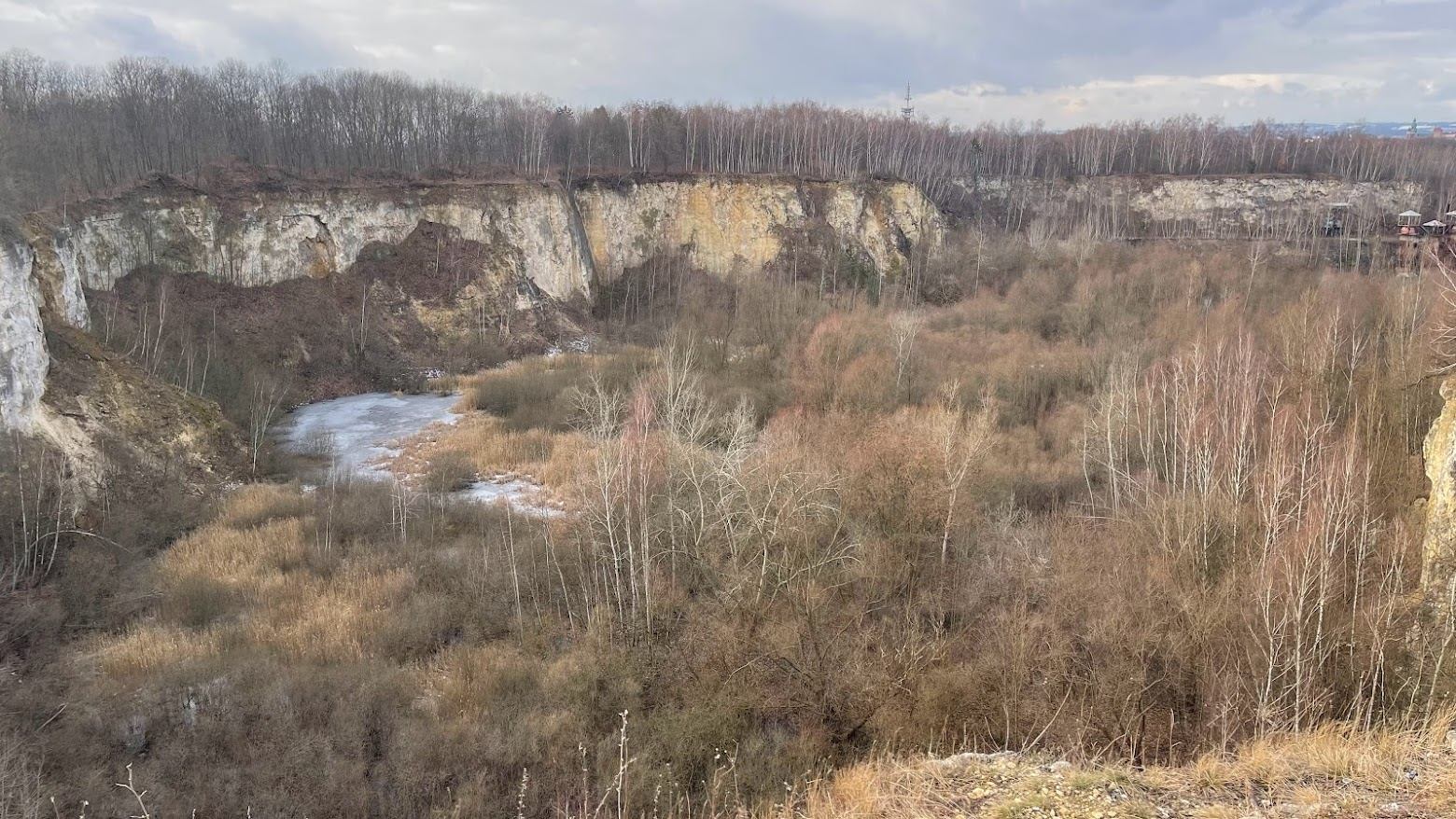
Wejście jest niepozorne. Schodzisz z grzbietu Krzemionek Podgórskich, mijasz Kopiec Krakusa, skręcasz wzdłuż ogrodzenia – i nagle grunt urywa się pod stopami. W dole otwiera się rozległa misa wyrobiska: pionowe ściany wapienia, rude od żelaza i pordzewiałych instalacji, rozsypujące się tarasy, kępy brzóz wrastających w skałę tam, gdzie nikt ich nie sadził. Kraków zostaje za plecami. To, co masz przed sobą, nie wygląda już jak miasto i jeszcze nie wygląda jak dzika dolina. To miejsce w trakcie.
Kamieniołom Liban to dawne wyrobisko wapienia w Podgórzu, eksploatowane na skalę przemysłową od 1873 roku, gdy krakowski przemysłowiec Bernard Liban założył tu ze wspólnikiem firmę Liban & Ehrenpreis. Przez kilka dekad wydzierano stąd kamień, wypalano wapno, formowano fragment miasta z jego własnego podłoża. Potem przyszła wojna i nadała temu miejscu drugie, znacznie cięższe znaczenie. Wiosną 1942 roku Niemcy urządzili w kamieniołomie karny obóz Służby Budowlanej – Baudienstu – przez który przeszło około dwóch tysięcy więźniów, głównie Polaków. W lipcu 1944 roku, podczas likwidacji obozu, na jego terenie rozstrzelano grupę ludzi. To nie jest tło. To fakt, który trzeba nieść ze sobą, schodząc w dół.
A potem dochodzi warstwa trzecia, najbardziej myląca dla oka. W 1993 roku Steven Spielberg kręcił w kamieniołomie Liban sceny „Listy Schindlera”. Na sąsiednim terenie autentycznego obozu KL Płaszów stał już pomnik, a w kadr wchodziłyby bloki, więc obóz odbudowano tutaj, kilkaset metrów dalej – postawiono kilka wież strażniczych, dziesiątki baraków, charakterystyczne ogrodzenia i drogę wyłożoną replikami macew, żydowskich nagrobków. Film dawno zszedł z ekranów, a scenografii nie rozebrano do końca. Betonowe słupy, fragment „drogi z macew”, resztki konstrukcji wciąż tkwią w trawie. Stoisz więc przed dekoracją cudzej tragedii, postawioną tuż obok miejsca tragedii prawdziwej. Oko nie zawsze potrafi je rozdzielić.
Bo Liban każe pytać, na co właściwie patrzysz. Rdza na ścianie może być pamiątką po przemyśle albo po filmie. Betonowy słup może być reliktem obozu albo rekwizytem. Cisza może być spokojem albo czymś znacznie cięższym. Fotograf, który tu przychodzi, szybko traci złudzenie, że robi „ładne kadry porzuconego miejsca”. Każde ujęcie jest tu decyzją: co pokazujesz, czego nie nazwałeś, gdzie postawiłeś granicę między estetyką a szacunkiem.
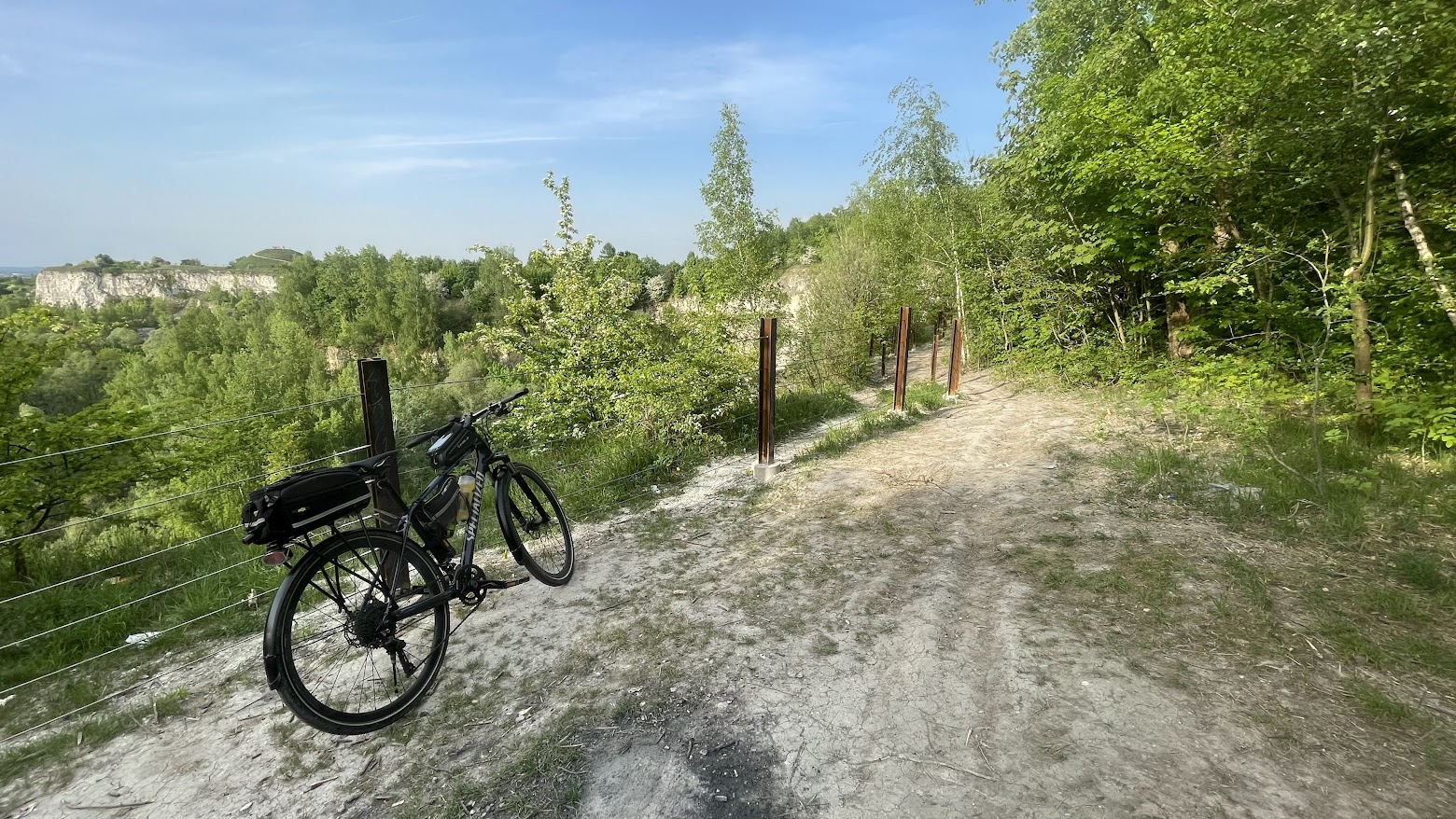
I właśnie dlatego warto tu zejść uważnie, a nie tylko po efektowny obraz. Przyroda nie czekała na nasze rozstrzygnięcia. Tam, gdzie ustała ludzka ingerencja, dno wyrobiska wypełniły płytkie stawy o zmiennym poziomie wody, zasilane deszczem i wodą podskórną – dziś żyją w nich płazy, przylatują tu ptaki wodne. Na nasłonecznionych, wapiennych półkach rozsiadły się ciepłolubne murawy z klasy Festuco-Brometea: macierzanka, szałwia. Nad wodą krążą ważki w liczbie, która w mieście wydaje się nierealna; latają motyle, a wyżej, nad krawędzią ścian, polują pustułki i krogulce. Od 2022 roku Liban jest użytkiem ekologicznym, a od końca 2024 roku otacza go wysokie ogrodzenie – formalnie teren jest zamknięty i najwięcej widać z krawędzi, spod kopca. Z popiołów przemysłu wyrosło jedno z najbogatszych przyrodniczo miejsc tej części Krakowa.
To jest sedno Libana – nakładanie się czasów, których nikt tu nie uporządkował. Przemysł, zbrodnia, kino i dzika regeneracja leżą na sobie warstwami, jak osady w odsłoniętej ścianie skały. Miejsce nie tłumaczy się samo. Nie ma tablic na każdym kroku, nie ma wytyczonej trasy emocji. Trzeba przyjść z wiedzą i z uwagą, bo bez nich łatwo pomylić dekorację z prawdą, a malowniczość z lekkomyślnością.
Zejdź więc tu, jeśli chcesz, ale zejdź świadomie. Patrz na światło ślizgające się po wapieniu wczesnym rankiem, słuchaj ważek nad stawem, zauważ brzozę, która rośnie z pęknięcia w skale. A potem przypomnij sobie, że ta sama ziemia trzyma w sobie historię, której żaden kadr nie udźwignie. Liban nie jest miejscem, które się fotografuje. Jest miejscem, które pyta, czy potrafisz unieść to, co widzisz.
Liban Quarry. A Place That Remembers More Than It Lets You See
The entrance gives nothing away. You come down off the ridge of Krzemionki Podgórskie, pass the Krakus Mound, follow the fence – and then the ground simply drops. Below you a wide bowl opens out: vertical limestone walls stained rust-red with iron and corroded fittings, crumbling terraces, clumps of birch growing straight out of the rock where no one planted them. Kraków falls away behind you. What lies ahead no longer looks like a city and does not yet look like a wild valley. It is a place caught in the middle.
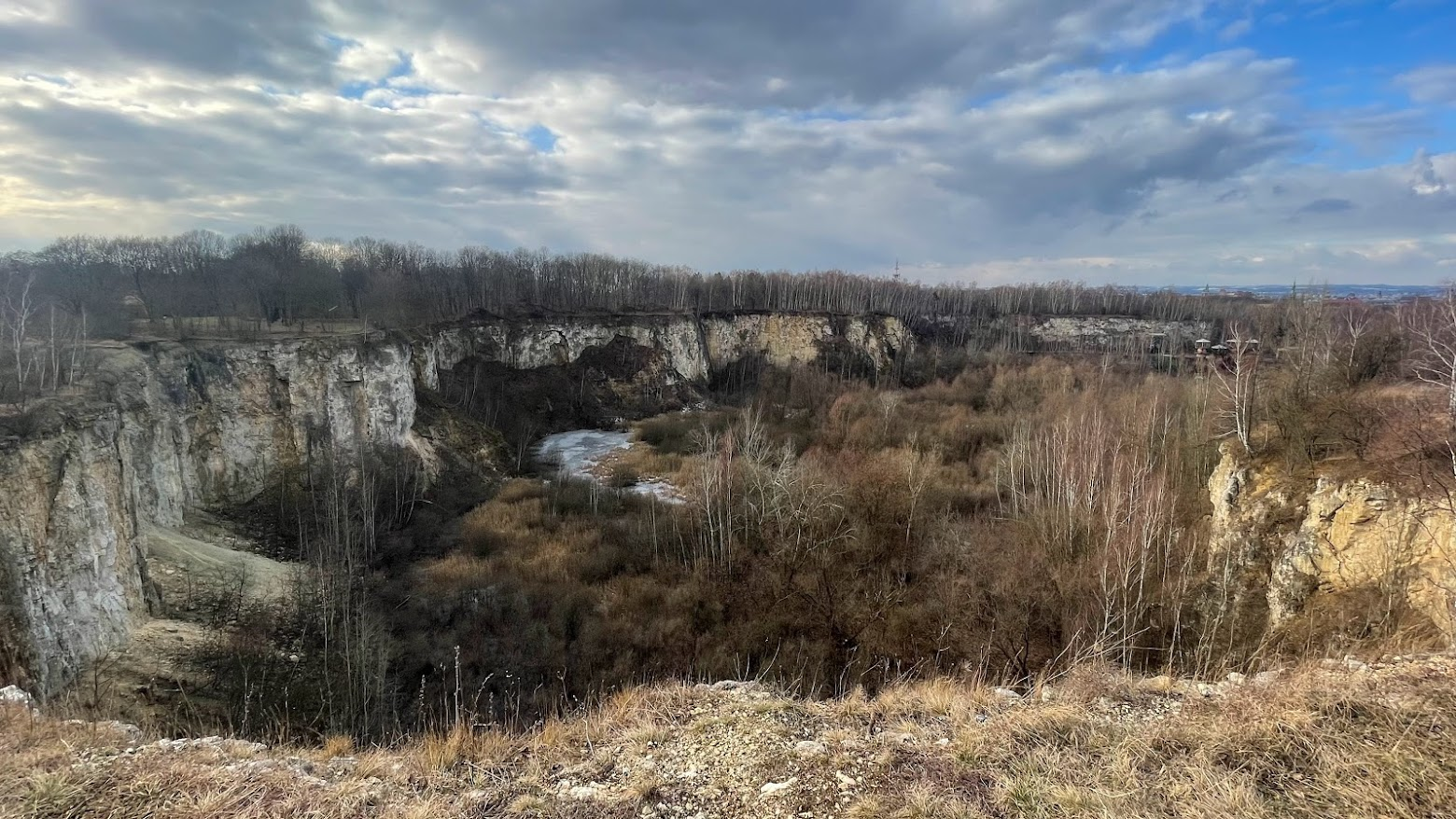
Liban Quarry is a former limestone working in the Podgórze district, quarried on an industrial scale from 1873, when the Kraków industrialist Bernard Liban and a partner founded the firm Liban & Ehrenpreis here. For decades stone was torn from here and lime was burned, a fragment of the city shaped out of its own bedrock. Then came the war, and it gave the place a second, far heavier meaning. From the spring of 1942 the Germans ran a penal camp here – the Straflager of the Baudienst, their forced labour service – through which around two thousand prisoners passed, mostly Poles. In July 1944, as the camp was being closed down, a group of people were shot on the site. This is not backdrop. It is a fact you have to carry with you as you walk down.
And then comes a third layer, the one most likely to fool the eye. In 1993 Steven Spielberg shot scenes of Schindler’s List in Liban Quarry. On the neighbouring site of the actual Płaszów camp a memorial already stood, and blocks of flats would have crowded into the frame, so the camp was rebuilt here instead, a few hundred metres away – a handful of watchtowers, dozens of barracks, the characteristic fencing, and a road paved with replica matzevot, Jewish gravestones. The film left cinemas long ago, but the set was never entirely dismantled. Concrete posts, a fragment of the road of gravestones, the remains of structures still sit in the grass. So you stand before the set of someone else’s tragedy, built right beside the site of a real one. The eye cannot always tell them apart.
Because Liban forces you to ask what you are actually looking at. Rust on a wall might be a relic of industry or of the film. A concrete post might be a trace of the camp or a prop. The silence might be peace, or something much heavier. A photographer who comes here quickly loses the illusion of taking “nice frames of an abandoned place”. Every shot is a decision: what you show, what you leave unnamed, where you draw the line between aesthetics and respect.
Which is exactly why it is worth coming down with care, not just for a striking image. Nature did not wait for us to settle these questions. Where human work stopped, the floor of the quarry filled with shallow ponds whose level rises and falls, fed by rain and groundwater – amphibians live in them now, and water birds come to rest. On the sunlit limestone shelves the thermophilic grasslands of the Festuco-Brometea class have taken hold: thyme, sage. Dragonflies circle the water in numbers that seem unreal inside a city; butterflies drift between them, and higher up, along the rim of the walls, kestrels and sparrowhawks hunt. Since 2022 Liban has been a protected ecological site, and since the end of 2024 a high fence has enclosed it – formally the ground is closed, and most of it is best seen from the rim, below the mound. Out of industrial ash has grown one of the richest natural habitats in this part of Kraków.
This is the heart of Liban – overlapping eras that no one here has tidied into order. Industry, atrocity, cinema and wild regeneration lie on top of one another in layers, like sediment in an exposed rock face. The place does not explain itself. There are no signs at every turn, no marked route for your feelings. You have to arrive with knowledge and with attention, because without them it is easy to mistake scenery for truth, and the picturesque for carelessness.
So go down, if you wish, but go down knowingly. Watch the early light slide across the limestone, listen to the dragonflies over the pond, notice the birch growing from a crack in the rock. And then remember that the same ground holds a history no single frame can carry. Liban is not a place you photograph. It is a place that asks whether you can bear what you see.


