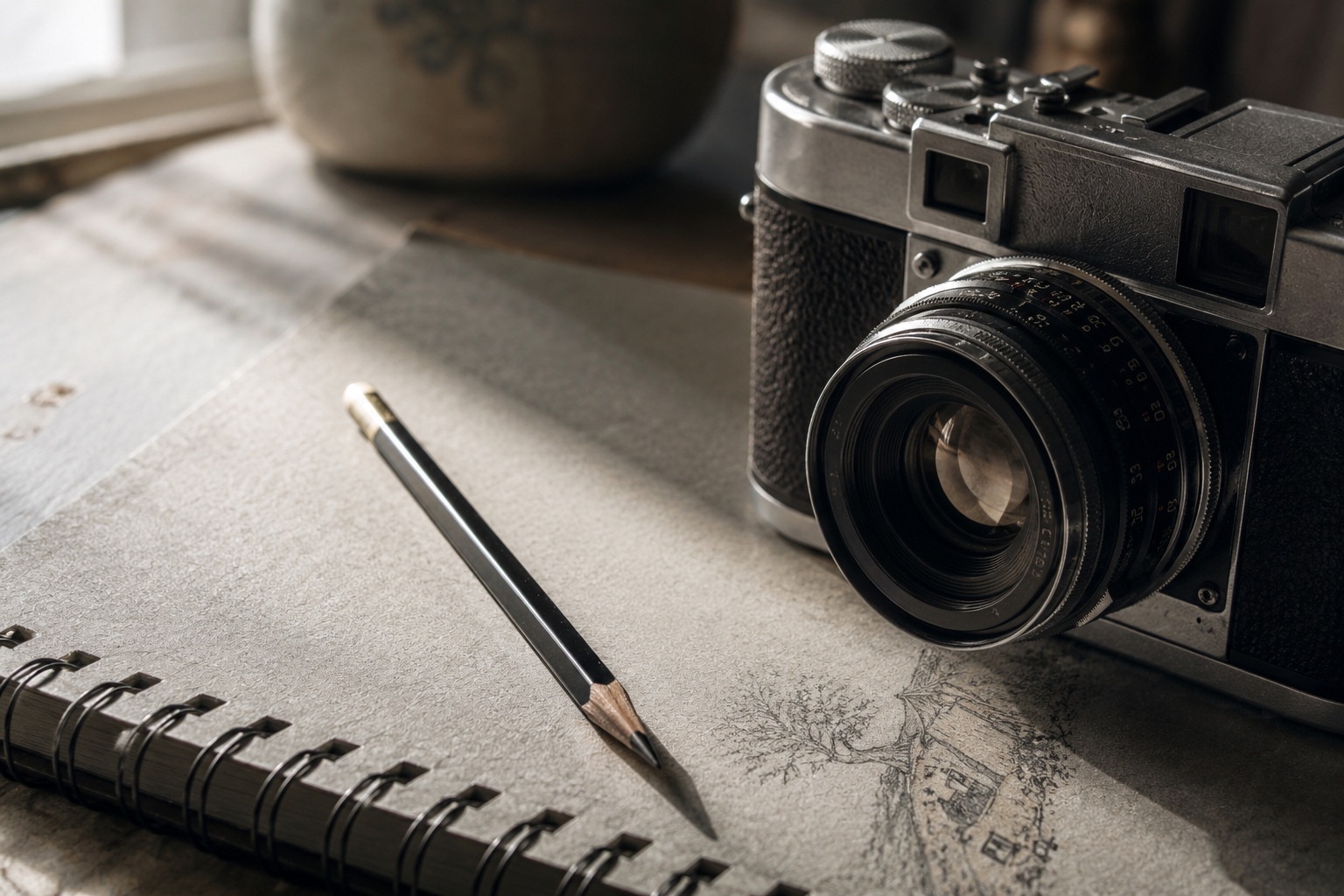
Żyjemy w epoce wizualnej natychmiastowości. Zapis obrazu na matrycy aparatu to kwestia ułamka sekundy – bezlitosnego, mechanicznego cięcia czasu, które zamraża rzeczywistość w cyfrowym kadrze. W tej pogoni za decydującym momentem łatwo zapomnieć, że patrzenie to proces, a nie tylko impuls. Kiedy jednak odłożymy na chwilę aparat i weźmiemy do ręki ołówek, zmuszamy nasze oko do zmiany trybu pracy. Zaczynamy doświadczać przestrzeni w rytmie slow art.
Grafit przesuwający się po chropowatej fakturze papieru i migawka aparatu pozornie należą do dwóch różnych porządków. W rzeczywistości są to dwa bieguny tej samej osi, na której opiera się każda sztuka wizualna. Czego zatem to archaiczne, powolne narzędzie może nauczyć współczesnego fotografa uzbrojonego w najnowszą optykę?
Anatomia światła i cienia
Fotografia z definicji jest malowaniem światłem. Aparat rejestruje je automatycznie, oddając wiernie rozkład fotonów odbitych od materii. Ołówek natomiast zmusza do fizycznego, mozolnego budowania światłocienia (chiaroscuro). Szkicując, nie możesz po prostu „uchwycić” cienia – musisz go zrozumieć. Musisz przeanalizować, skąd pada główne źródło światła, gdzie znajduje się półcień, a gdzie światło odbite delikatnie rozjaśnia najciemniejsze partie bryły.
Przekładając to doświadczenie na fotografię: artysta, który potrafi wykreować trójwymiarowość za pomocą szarości grafitu, staje się znacznie bardziej świadomym obserwatorem podczas pracy z oświetleniem studyjnym czy w trudnych warunkach plenerowych. Zaczyna widzieć światło nie jako wartość ekspozycji, ale jako materię rzeźbiącą formę.
Kompozycja poprzez redukcję
Jednym z największych przekleństw fotografii jest jej dosłowność. Obiektyw rejestruje wszystko: główny motyw, ale też śmietnik w tle, przypadkowego przechodnia i plątaninę kabli. Rysunek działa w oparciu o zupełnie odwrotną logikę – zaczyna się od pustej karty. Pojawia się na niej tylko to, co rysownik uzna za istotne.
„Szkic jest sztuką syntezy i świadomej eliminacji. To lekcja wizualnej ascezy.”
Gdy fotograf regularnie szkicuje w terenie, uczy się redukcji. Ołówek wyrabia nawyk oddzielania szumu od esencji. To właśnie ta umiejętność decyduje o sile kadru – wiedza o tym, co zostawić w ciemnościach, co ukryć w nieostrości, a co umieścić w mocnym punkcie kompozycji. Linia nakreślona w szkicowniku staje się odpowiednikiem krawędzi kadru i linii wiodących, które później odnajdujemy w obiektywie.
Czas jako narzędzie percepcji
Szkicowanie w terenie to forma aktywnej medytacji. Wymaga dłuższego postoju, zakotwiczenia się w jednym miejscu. Obserwacja trwająca piętnaście, trzydzieści minut odsłania to, co umyka przy szybkim „pstrykaniu”. Chmury zmieniają układ, wiatr inaczej układa gałęzie drzew, a światło przesuwa się po architekturze, odkrywając detale, które wcześniej tonęły w cieniu. Ten dar czasu pozwala na zbudowanie emocjonalnej więzi z fotografowanym miejscem, a to zawsze rezonuje w ostatecznym obrazie.
Warsztat: Szkicownik jako przedłużenie obiektywu
Jak połączyć te dwa światy w codziennej praktyce twórczej? Nie musisz być wybitnym rysownikiem, aby czerpać z tego korzyści. Szkic przedfotograficzny nie jest dziełem sztuki samym w sobie – jest notatką, mapą myśli i treningiem oka.
Podczas kolejnego pleneru, zanim spojrzysz przez wizjer aparatu, spróbuj wykonać poniższe ćwiczenie:
- Zatrzymaj się i zredukuj: Wybierz scenę, która przykuła Twoją uwagę. Usiądź. Wyciągnij mały szkicownik i miękki ołówek (np. 4B lub 6B).
- Studium brył (3 minuty): Zamiast rysować detale, zmruż oczy. Podziel scenę na maksymalnie cztery plany tonalne – od najjaśniejszego do najciemniejszego. Zarysuj tylko wielkie plamy światła i cienia.
- Szukanie osi (2 minuty): Narysuj prostokąt o proporcjach Twojej matrycy (np. 3:2). Poprowadź w nim kilka szybkich linii reprezentujących główne kierunki w Twojej scenie. Zastanów się, czy prowadzą one wzrok tam, gdzie chcesz.
- Sięgnij po aparat: Mając w głowie i na papierze syntetyczny obraz sceny, weź aparat. Skomponuj kadr, opierając się na uproszczonych liniach i masach tonalnych ze swojego szkicu.
Ołówek i aparat nie są swoimi konkurentami. To dwa instrumenty grające tę samą melodię, z których jeden dyktuje tempo, a drugi precyzyjnie chwyta wybrzmienie akordów. Uważność ołówka rodzi świadomość obiektywu.
What the Pencil Teaches the Photographer
We live in an era of visual immediacy. Capturing an image on a camera sensor is a matter of a fraction of a second—a ruthless, mechanical slice of time that freezes reality in a digital frame. In this pursuit of the „decisive moment,” it is easy to forget that seeing is a process, not just an impulse. However, when we set the camera aside for a moment and pick up a pencil, we force our eyes to switch modes. We begin to experience space in the rhythm of slow art.
The graphite gliding across the rough texture of paper and the camera’s shutter seemingly belong to two different worlds. In reality, they are two poles of the same axis upon which all visual art rests. What, then, can this archaic, slow tool teach a modern photographer equipped with the latest optics?
The Anatomy of Light and Shadow
Photography, by definition, is painting with light. A camera records it automatically, faithfully rendering the distribution of photons reflected from matter. A pencil, on the other hand, forces a physical, laborious construction of light and shade (chiaroscuro). When sketching, you cannot simply „capture” a shadow—you must understand it. You must analyze where the primary light source originates, where the halftone lies, and where reflected light subtly illuminates the darkest parts of a form.
Translating this experience into photography: an artist who can create three-dimensionality using only the grays of graphite becomes a much more conscious observer when working with studio lighting or in challenging outdoor conditions. They begin to see light not as an exposure value, but as a substance that sculpts form.
Composition Through Reduction
One of photography’s greatest burdens is its literalness. A lens records everything: the main subject, but also the trash can in the background, a random passerby, and a tangle of wires. Drawing operates on a completely opposite logic—it begins with an empty page. Only what the artist deems essential appears upon it.
Sketching is the art of synthesis and conscious elimination. It is a lesson in visual asceticism.
When a photographer regularly sketches in the field, they learn reduction. The pencil develops the habit of separating noise from essence. It is this very skill that determines the strength of a frame—knowing what to leave in the shadows, what to hide in the blur, and what to place at the focal point of the composition. A line drawn in a sketchbook becomes the equivalent of the frame’s edge and the leading lines found later through the viewfinder.
Time as a Tool of Perception
Field sketching is a form of active meditation. It requires a long pause, an anchoring in one place. Observation lasting fifteen or thirty minutes reveals what escapes a quick „snap.” Clouds shift their patterns, the wind rearranges the branches of trees, and light moves across architecture, revealing details previously drowned in shadow. This gift of time allows for the creation of an emotional bond with the subject, which always resonates in the final image.
Workshop: The Sketchbook as an Extension of the Lens
How do we combine these two worlds in daily creative practice? You do not need to be a master draftsman to reap the benefits. A pre-photographic sketch is not an end in itself—it is a note, a mind map, and eye training.
During your next outing, before you look through the camera’s viewfinder, try the following exercise:
- Stop and Reduce: Choose a scene that caught your attention. Sit down. Take out a small sketchbook (A6 or A5 format is sufficient) and a soft pencil (e.g., 4B or 6B).
- Study of Masses (3 minutes): Instead of drawing details (leaves, windows, textures), squint your eyes. Divide the scene into a maximum of four tonal planes—from lightest to darkest. Sketch only the large masses of light and shadow. This exercise teaches you to see the global contrast of a scene, which translates into a better sense of the histogram and balance in your photography.
- Find the Axes (2 minutes): Draw a rectangle with the proportions of your sensor (e.g., 3:2). Within it, draw a few quick lines representing the main directions in your scene (e.g., the horizon, a road, a leaning tree). Consider whether they lead the eye where you want it to go.
- Reach for the Camera: With a synthetic image of the scene in your mind and on paper, take your camera. Compose your frame based on the simplified lines and tonal masses from your sketch.
You will notice that your movements with the camera are slower, more purposeful. You are no longer searching for a frame blindly; you have already found it in your imagination, and now you are simply recording it on the sensor.
The pencil and the camera are not competitors. They are two instruments playing the same melody—one dictates the tempo, while the other precisely catches the resonance of the chords. The mindfulness of the pencil gives birth to the awareness of the lens.


