
Widać je z daleka – okrągłą wieżę, która wystaje ponad linię drzew jak palec wskazujący niebo. Zamek Smoleń nie ukrywa się. Stoi na skalistym wzniesieniu, szorstkiej wapiennej ostrodze wypiętrzającej się nad doliną i trwa w swojej połowiczności: ani ruina zupełna, ani budowla. Czas obszedł się z nim surowo i jednocześnie twórczo – odebrał mu dachy, stropy, belkowanie, ale zostawił kamień i kształt. Zostało to, co najtrwalsze.
Historia i krajobraz
Zamek Smoleń leży na Jurze Krakowsko-Częstochowskiej, w gminie Pilica, w powiecie zawierciańskim – w obszarze, gdzie ziemia jest rzeźbiona wapiennym dłutem: skałki, turnie, ostańce, jaskinie, wszystko w jednej palecie bieli, szarości i ochry, którą w zależności od pory roku pokrywa zieleń lub bezlistna brązowość buku i grabu.
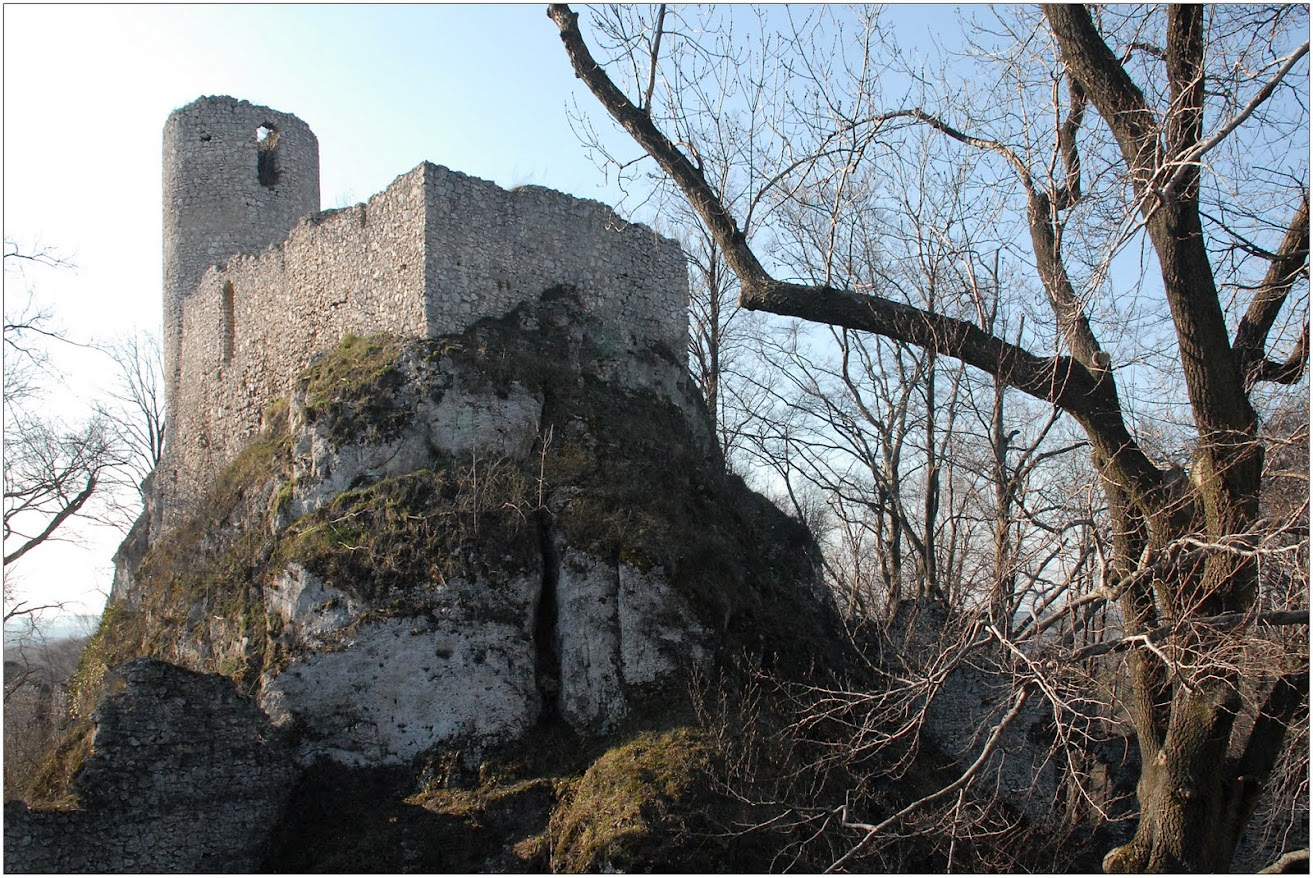
Warownia pochodzi prawdopodobnie z XIV wieku, z czasów Kazimierza Wielkiego, kiedy wzdłuż granicy polsko-śląskiej wznoszono system umocnień zwany dziś Szlakiem Orlich Gniazd. Smoleń był jednym z ogniw tej kamiennej sieci – zamków i warowni budowanych na skalnych wzniesieniach, gdzie skała sama w sobie stanowiła element obronny, naturalny mur wykrojony przez miliony lat erozji. Zamek należał do dóbr królewskich, a jego historia splata się z losami Korony i regionu: ze zmianami właścicieli, wojnami, stopniowym upadkiem i porzuceniem.
Najbardziej czytelnym elementem ruin jest okrągła wieża – cylindryczna, zbudowana z łamanego kamienia wapiennego, miejscami porośnięta mchem i pnączami. Zachowały się również fragmenty murów obwodowych. Reszta jest domysłem wspomaganym wyobraźnią: tam, gdzie teraz rośnie trawa i krzew, były niegdyś komnaty; tam, gdzie ptak wije gniazdo, stał kiedyś dach.
Miejsce objęte jest ochroną jako rezerwat przyrody, co oznacza, że ruiny i ich otoczenie mają prawny status ochrony – nie tylko kamienia, ale i flory, jaskiń i skał, które tworzą ekosystem jurajskiego wzgórza.
Legendy i nastrój
Jak każda stara warownia, Smoleń przyciągnął z biegiem czasu warstwę opowieści. Legenda o Białej Damie – postaci, która błąka się wśród ruin widziana o zmierzchu lub przy księżycu – jest może najpopularniejszym miejscowym przekazem, choć tożsamość zjawy pozostaje nieustalona. Mówi się też o skarbie ukrytym w podziemiach zamku, o tajnych przejściach i tunelach drążących wapienną skałę – motyw, który powtarza się w legendach połowy polskich zamków, a mimo to nie traci swojej siły. Podziemia kuszą wyobraźnię dlatego właśnie, że wapień Jury jest realnie pełen szczelin, otworów, jaskiń – teren dosłownie podziurawiony naturalnymi kanałami. Legenda i geologia spotykają się tutaj w sposób, który trudno od siebie oddzielić.
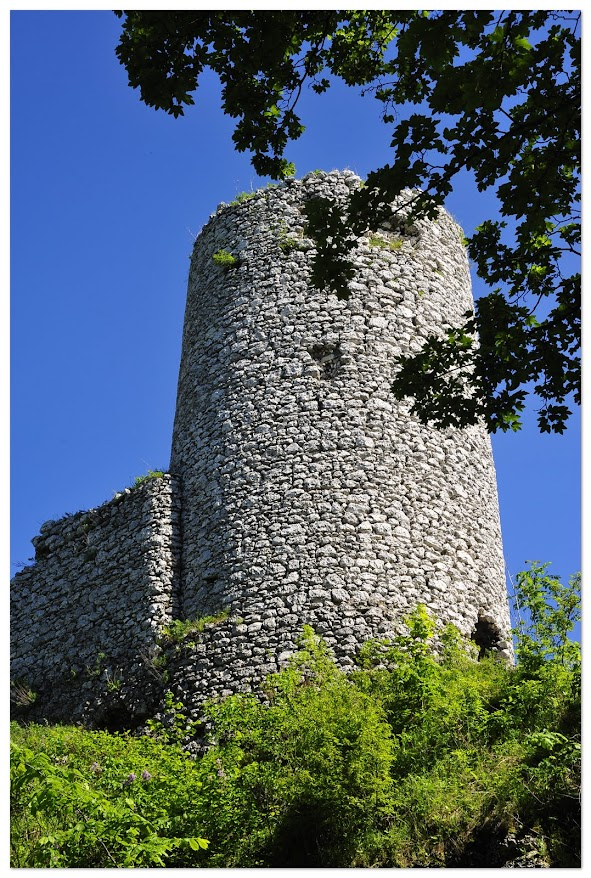
Smoleń to miejsce, które fotografowie i rysownicy odwiedzają nie dla wygody, lecz dla nastroju. Ruiny są piękne w kadrze o świcie, kiedy mgła zalega w dolinie i wieża wyrasta z tej mgły jak czarna sylwetka. Są interesujące w pełnym słońcu, kiedy szczegół kamiennej struktury wyostrza się i widać każdą spoinę, każde pęknięcie. Przy zachodzącym słońcu mur zmienia kolor – z szarego na złoty i rudy – i staje się czymś niemal organicznym. Każda pora dnia daje inne zdjęcie, inny szkic, inną wartość obserwacji.
Wokół zamku rozciągają się Skałki Smoleńskie – skupisko jurajskich ostańców, które same w sobie są wartym uwagi elementem krajobrazu. Wapienne bloki, popękane i porosłe liszajami, stoją jak nieregularna straż wokół wzgórza. W ich szczelinach chowają się małe jaskinie – ciemne, przysypane liściem, świadczące wyraźnie o tym, jak żywa jest pod stopami geologia tego miejsca.
Czas i percepcja
Ruiny uczą pewnego rodzaju percepcji – widzenia niepełnego, widzenia braków. Zamek Smoleń nie jest rekonstrukcją, nie jest skansenem, nie ma tablic odtwarzających każdą izbę w szczegółach. To, co zostało, to struktura: kamienna, milcząca, wymagająca od obserwatora pracy wyobraźni. Fotograf, który tu przyjeżdża, musi sam skomponować całość z fragmentów: wieży, muru, skały pod nimi, nieba powyżej, roślinności wcinającej się w każdą szczelinę. To nie jest przeszkoda – to istota miejsca.
Smoleń nie opowiada historii w gotowej formie. Zostawia miejsce na dopowiedzenie.
Dojazd i szlaki turystyczne
Zamek Smoleń leży przy Szlaku Orlich Gniazd – jednym z najbardziej znanych szlaków turystycznych w Polsce, oznakowanym kolorem czerwonym. Szlak prowadzi przez szereg zamków i punktów widokowych na Jurze: Ogrodzieniec, Bobolice, Mirów, Olsztyn, Rabsztyn – i można go przemierzać etapami, pieszo lub rowerem.
Do Smolenia można dojechać samochodem: z Krakowa to około 60–65 km na północ, z Częstochowy około 50 km na południe. Najbliższe miasto to Pilica, do której prowadzą drogi z Olkusza i Zawiercia. Parking przy wsi Smoleń umożliwia krótki spacer pod wzgórze zamkowe. Wejście na teren ruin jest bezpłatne i dostępne dla pieszych.
Okolice oferują dalsze możliwości: Pustynia Błędowska – rozległy, unikalny w skali Europy Środkowej obszar piasków – leży kilkadziesiąt kilometrów na południe i sama w sobie stanowi osobny, niezwykły krajobraz. Szlak Orlich Gniazd można łączyć z wycieczkami do Pieskowej Skały, Ojcowskiego Parku Narodowego, Ogrodzieńca czy Rabsztyna – każde z tych miejsc ma własny charakter i własne ruiny do sfotografowania.
Najlepszy czas na wizytę? Wczesna wiosna, kiedy skałki jeszcze nie zasłania zieleń i bryły wapienia rysują się ostro na tle nieba, lub jesień, kiedy buk i grab barwią się na rudy i złoty, a poranne mgły czynią krajobraz malarskim sam z siebie. Ale Smoleń wart jest odwiedzin o każdej porze. Jest miejscem, które nie gra na łatwych efektach. Wymaga chwili zatrzymania, cierpliwości i gotowości do patrzenia.
English Version
Smoleń. Ruins on a Limestone Ridge
The tower is visible from a distance – cylindrical, rising above the treeline like a stone finger pointing at the sky. Smoleń Castle does not conceal itself. It stands on a rocky outcrop, a rough limestone spur jutting above the valley, and persists in its incompleteness: neither a complete ruin nor a standing building. Time has treated it with equal severity and creativity – stripping away roofs, floors, and timber, but leaving stone and form. What remains is what endures.
History and Landscape
Smoleń Castle lies on the Kraków-Częstochowa Upland (Jura Krakowsko-Częstochowska), in the Pilica commune of Zawiercie County – a landscape carved in limestone. Rocky pinnacles, isolated outcrops, and caves unfold in a palette of white, grey, and ochre that shifts through the seasons from green to the bare brown of beech and hornbeam.
The fortress dates probably to the fourteenth century, from the time of Casimir the Great, when a line of fortifications was constructed along the Polish-Silesian border – the chain now known as the Trail of Eagles’ Nests (Szlak Orlich Gniazd). Smoleń was one link in this stone network of castles and strongholds built on rocky heights, where the rock itself often served as part of the defences, a natural wall shaped by millions of years of erosion. The castle was royal property, and its history intertwines with the fortunes of the Polish Crown: changes of ownership, wars, slow decline, and eventual abandonment.
The most legible element of the ruins today is the round tower – cylindrical, built from split limestone, mossy and threaded with climbing plants. Fragments of the surrounding walls survive too. The rest requires inference: where grass and shrubs grow now, there were once chambers; where a bird nests today, there was once a roof.
The site is protected as a nature reserve, its legal status covering not just stone but the flora, caves, and rock formations that form the ecosystem of this Jurassic hilltop.
Legends and Atmosphere
Like all old strongholds, Smoleń has gathered layers of story over time. The legend of the White Lady – a figure said to drift among the ruins at dusk or by moonlight – is perhaps the most widely known local tale, though her identity remains uncertain. There are also stories of treasure buried in the castle’s cellars, of hidden passages and tunnels drilled through limestone – a motif that recurs across half the castles of Poland, and loses none of its power for it. The underground draws the imagination precisely because the limestone upland is genuinely full of fissures, openings, and caves. Legend and geology meet here in a way that is difficult to entirely disentangle.
Smoleń is a place photographers and draughtsmen visit not for comfort, but for atmosphere. The ruins are compelling at dawn, when mist lies in the valley and the tower rises from it as a dark silhouette. They are interesting in full sun, when the detail of the stone surface sharpens and every joint, every crack becomes visible. In late afternoon light the wall changes colour – from grey to gold to rust – and becomes something almost organic. Each time of day yields a different photograph, a different sketch, a different quality of observation.
Around the castle stretch the Smoleń Rocks – a grouping of Jurassic limestone outcrops worth attention in their own right. Limestone blocks, cracked and lichen-covered, stand like an irregular guard around the hill. In their crevices hide small caves – dark, leaf-floored, clearly evidencing the living geology underfoot.
Time and the Act of Seeing
Ruins teach a certain kind of vision – incomplete vision, a vision of absences. Smoleń Castle is not a reconstruction or an open-air museum. There are no boards restoring every room to its former detail. What remains is structure: stone, silent, demanding imaginative work from the observer. A photographer arriving here must compose the whole from fragments – the tower, the wall, the rock below them, the sky above, the vegetation pressing into every crack. This is not an obstacle. It is the nature of the place.
Smoleń does not tell its story in finished form. It leaves room for completion.
Getting There and Hiking Trails
Smoleń Castle sits on the Trail of Eagles’ Nests (Szlak Orlich Gniazd), one of the best-known hiking routes in Poland, marked in red. The trail links a series of castle ruins and viewpoints across the Jura – Ogrodzieniec, Bobolice, Mirów, Olsztyn, Rabsztyn – and can be walked or cycled in stages.
The castle is accessible by car: approximately 60–65 km north of Kraków, around 50 km south of Częstochowa. The nearest town is Pilica, reachable from Olkusz and Zawiercie. A car park near the village of Smoleń allows a short walk up to the castle hill. Entry to the ruins is free and open to walkers.
The wider area offers further possibilities: the Błędów Desert – an extensive stretch of sand unique in Central Europe – lies some distance to the south and is a remarkable landscape in its own right. The Eagle’s Nests trail can be combined with visits to Pieskowa Skała, the Ojców National Park, Ogrodzieniec, or Rabsztyn – each with its own character and its own ruins to photograph.
The best time to visit? Early spring, before the rock faces are hidden by foliage, or autumn, when beech and hornbeam turn rust and gold, and the morning mist is dense enough to make the landscape painterly on its own terms. But Smoleń repays a visit in any season. It is not a place that works through easy effects. It asks for a moment of stillness, patience, and the willingness to look carefully.


