
Zamek Rabsztyn wyrasta nad miastem — dosłownie. Z centrum Olkusza widać wzgórze, na którym stoją ruiny, i wystarczy kilka kilometrów drogi, by znaleźć się u podnóża wapiennej ostrogi, na której przez wieki stała warownia. Ta bliskość jest wśród zamków jurajskich rzadkością: większość z nich tkwi w głuszy, przy odludnych wsiach, daleko od codziennego rytmu. Rabsztyn jest inaczej — jest zamkiem w bezpośrednim sąsiedztwie żywego miasta, zamkiem, który mieszkańcy Olkusza mają dosłownie na widoku.
Historia i krajobraz
Warownia pochodzi prawdopodobnie z XIV wieku i jest jednym z ogniw Szlaku Orlich Gniazd — łańcucha zamków wzniesionych w czasach Kazimierza Wielkiego wzdłuż dawnej granicy polsko-śląskiej. Jak inne zamki tej sieci, stoi na wapiennym wzniesieniu, w otoczeniu jurajskiej rzeźby terenu: skałek, ostańców, zarośli grabowych i bukowych lasów. Zamek był własnością królewską, potem przechodził w ręce prywatnych właścicieli, aż w końcu — jak większość warowni tej ziemi — podupadł i został porzucony. Zniszczenia widoczne w murach są w dużej mierze dziełem XVII wieku, kiedy wiele polskich zamków podzieliło los ofiar wojen i pożarów.
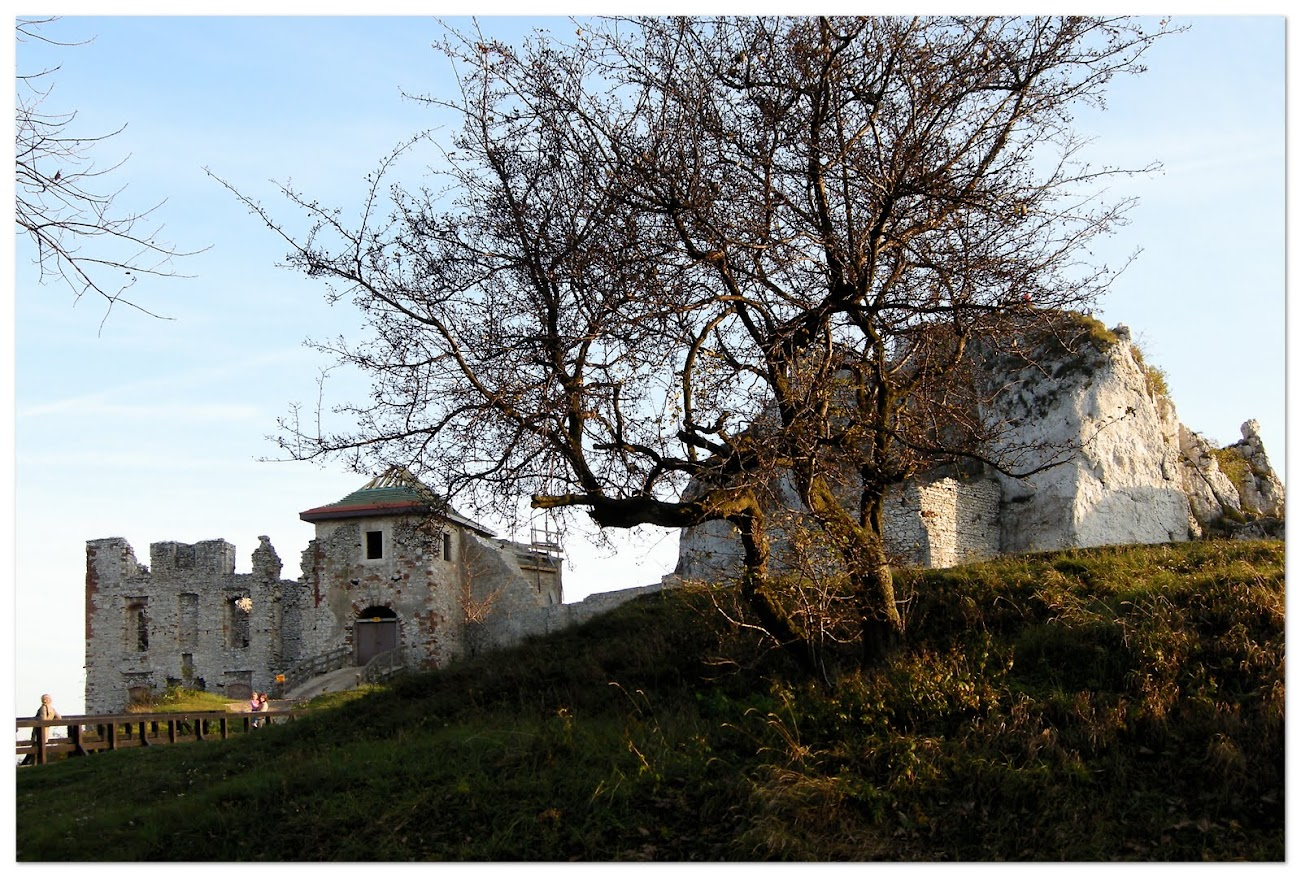
W odróżnieniu od bardziej odległych ruin jurajskich, Rabsztyn w ostatnich latach stał się przedmiotem aktywnych prac konserwatorskich i częściowej restauracji. Dzięki zaangażowaniu samorządu olkuskiego mury i fragmenty wież zostały zabezpieczone, a miejsce stało się bardziej dostępne dla zwiedzających. To nadaje zamkowi inny charakter niż całkowicie porzuconym ruinom: Rabsztyn jest ruiną, która toczy z czasem świadomy dialog.
Legendy i nastrój
Zamek ma swoje podania. Mówi się o skarbie ukrytym w podziemiach, o tajnych przejściach i tunelach drążących wapienną skałę — motywy dobrze znane z polskiej tradycji zamkowej. Są też przekazy o zjawie lub duchu widywanym wśród murów, choć szczegóły różnią się zależnie od źródła. Te opowieści pełnią funkcję, którą pełnią zawsze: wypełniają puste komnaty i zasypane piwnice czymś żywym, zamieniają architektoniczny szkielet w przestrzeń zamieszkałą przez wyobraźnię.
Z fotograficznego punktu widzenia Rabsztyn oferuje zaskakującą różnorodność. O świcie, gdy mgła jeszcze nie opuściła doliny, mury zawieszają się ponad bielą, a krawędź wieży rysuje się na niebie jak coś wyciętego z ciemności. W południe faktura kamienia w ostrym świetle ujawnia każde pęknięcie i warstwy, które czas złożył jak sedyment. Jesienią ruinę otulają kolory lasu — żółcie, rdze i brązy — i wtedy miejsce staje się malarskie w niemal dosłownym sensie: krajobraz gotowy do zapisania pędzlem albo ołówkiem.
Pustynia na horyzoncie
Jest jeszcze coś, co wyróżnia okolice Rabsztyna wśród innych miejsc jurajskich — sąsiedztwo Pustyni Błędowskiej, rozległego pola piasków leżącego kilka kilometrów na południe. Pustynia Błędowska jest zjawiskiem geologicznym i krajobrazowym osobnym: rozległa, płaska, jasna przestrzeń piasku pośród zieleni, największe tego rodzaju naturalnie ukształtowane piaskowe pole w Europie Środkowej. Zestawienie zamku na skale z pustynią w dolinie to kontrast, który trudno spotkać gdzie indziej: wapień i piasek, pion i poziom, stały i lotny, kamienny i ziarnisty. Dla fotografa jest to dar — dwa zupełnie odmienne kadry i dwie różne skale czasu dostępne w ciągu jednego dnia.
Bliskość miasta
Bliskość miasta jest dla Rabsztyna zarówno błogosławieństwem, jak i wyzwaniem. Z jednej strony sprawia, że zamek jest dostępny, odwiedzany, żywy — nie grozi mu zapomnienie, które czeka odludne ruiny. Z drugiej, masowość odwiedzin potrafi rozrzedzić nastrój, który w miejscu bardziej oddalonym byłby gęstszy. Ale fotograf czy rysownik, który przychodzi o świcie lub w dzień powszedni poza sezonem, znajdzie tu skupienie i ciszę. Ruiny nie znikły za estetycznym ogrodzeniem. Kamień jest nadal kamieniem. Niebo nad wieżą nadal swoje.
Rabsztyn nie pyta o wiele czasu. Prosi jedynie o chwilę zatrzymania — i gotowość, żeby spojrzeć w górę i naprawdę zobaczyć, co tam stoi.
Dojazd i szlaki turystyczne
Rabsztyn leży w gminie Olkusz, kilka kilometrów od centrum miasta. Z Krakowa to niecałe 30 km — droga krajowa DK94 lub autostrada A4 i zjazd na Olkusz. Z Częstochowy około 70 km na południe. Zamek leży przy Szlaku Orlich Gniazd, oznakowanym kolorem czerwonym, który prowadzi przez cały ciąg jurajskich warowni od Krakowa po Częstochowę. Wejście na teren ruin jest dostępne dla pieszych; w okolicy jest parking. Szlak pieszy łączy zamek z dalszymi punktami widokowymi w okolicy.
Pustynia Błędowska leży kilka kilometrów na południe i można do niej dotrzeć samochodem lub rowerem szlakami biegnącymi przez lasy. Centrum Olkusza — z gotycką kolegiatą i historycznym rynkiem — jest w zasięgu krótkiej przejażdżki. Rabsztyn dobrze wpisuje się w trasę jednodniową łączącą zamek, pustynię i miasto w jeden spójny dzień: trzy różne skale, trzy różne nastroje, trzy zestawy zdjęć.
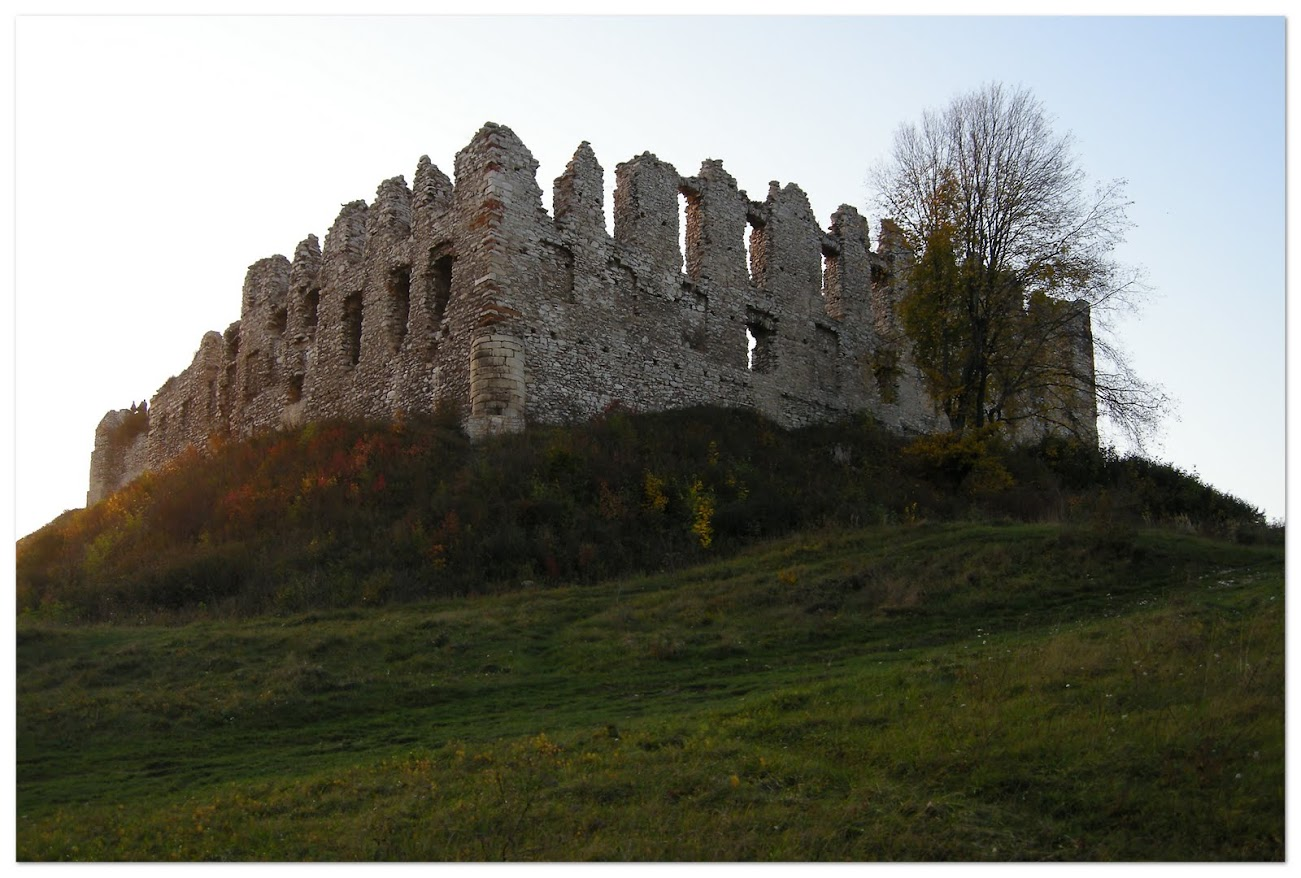
Najlepszy czas na wizytę? Wiosna lub jesień — kiedy liści jeszcze nie ma lub już opadły, a skały i mury rysują się wyraźnie na tle nieba. Ranek, przed tłumem. I z aparatem lub szkicownikiem — bo Rabsztyn jest miejscem, które chce być zapisane.
English Version
Rabsztyn. A Ruin at the Edge of a City and a Desert
The ruins of Rabsztyn Castle rise above a city — literally. From the centre of Olkusz, the hill on which they stand is already visible, and a few kilometres of road is enough to reach the limestone spur where a fortress stood for centuries. This proximity is rare among the castles of the Jura: most of them sit deep in forest, near remote villages, beyond the reach of ordinary commutes. Rabsztyn is different — a castle in the immediate neighbourhood of a living city, within sight of its daily life.
History and Landscape
The fortress probably dates to the fourteenth century and forms one link in the Trail of Eagles’ Nests (Szlak Orlich Gniazd) — the chain of strongholds built during the reign of Casimir the Great along the former Polish-Silesian border. Like the other castles in this chain, it stands on a limestone ridge in a landscape of Jurassic rock outcrops, hornbeam thickets, and beech forest. The castle was royal property, passed over time to private owners, and eventually — like most strongholds of this land — fell into decline and was abandoned. The destruction visible in the walls is largely the work of the seventeenth century, when war and fire moved through the region.
Unlike the more remote ruins of the Jura, Rabsztyn in recent years has been the subject of active conservation and partial restoration work. Through the engagement of the Olkusz municipal authorities, sections of the walls and tower fragments have been secured and made more accessible to visitors. This gives the place a different quality from completely untouched ruins: Rabsztyn is a ruin that holds a conscious dialogue with time.
Legends and Atmosphere
The castle has its stories. Tales of treasure buried in underground vaults, of secret passages and tunnels drilled through the limestone — motifs familiar from Polish castle tradition. There are also accounts of apparitions seen among the walls, though details vary depending on who is asked. These stories serve the function they always do: they fill the empty chambers and sealed cellars with something alive, turning an architectural skeleton into a space inhabited by imagination.
From a photographic point of view, Rabsztyn offers surprising variety. At dawn, when mist still lies in the valley, the walls are suspended above white emptiness and the tower’s edge is drawn against the sky like something cut from darkness. At midday, the texture of the stone in sharp light reveals every crack, every layer that time has laid down like sediment. In autumn, the ruin is wrapped in the colours of forest — yellows, rusts, and browns — and the place becomes almost literally painterly: a landscape ready to be set down with brush or pencil.
Desert on the Horizon
There is something else that distinguishes this part of the Jura from the rest — the proximity of the Błędów Desert (Pustynia Błędowska), an extensive sandy expanse lying a few kilometres to the south. The Błędów Desert is a geological and landscape phenomenon in its own right: a broad, flat, pale field of sand set among greenery, the largest naturally formed sandy expanse in Central Europe. The combination of a castle on a rock and a desert in the valley is a contrast difficult to find elsewhere — limestone and sand, vertical and horizontal, fixed and shifting, stone and grain. For a photographer, this is a gift: two entirely different compositions, two different scales of time, accessible within a single day.
Proximity and Attention
The city’s nearness is for Rabsztyn both a blessing and a challenge. On one hand, it ensures the castle remains accessible, visited, alive — not at risk of the forgetting that threatens some remote ruins. On the other, visitor numbers can thin the kind of atmosphere that greater solitude would allow. But a photographer or draughtsman who comes at dawn, or on an ordinary weekday outside the peak season, will find focus and quiet here. The ruins have not disappeared behind an aesthetic fence. Stone is still stone. The sky above the tower is still its own.
Rabsztyn does not ask for much time. It asks only for a moment of stillness — and the readiness to look up and actually see what stands there.
Getting There and Hiking Trails
Rabsztyn lies in the Olkusz commune, a few kilometres from the town centre. From Kraków the distance is under 30 km — via national road DK94 or the A4 motorway and the Olkusz exit. From Częstochowa, approximately 70 km to the south. The castle sits on the Trail of Eagles’ Nests (Szlak Orlich Gniazd, marked in red), which links the full chain of Jurassic fortifications from Kraków to Częstochowa. Entry to the ruins is open to walkers; parking is available nearby. The trail connects the castle with further viewpoints in the area.
The Błędów Desert lies a few kilometres to the south and can be reached by car or by cycling along forest trails. The centre of Olkusz — with its Gothic collegiate church and historic market square — is a short drive away. Rabsztyn fits naturally into a single day combining castle, desert, and town: three different scales, three different moods, three different sets of photographs.
The best time to visit? Spring or autumn — when leaves are absent or newly fallen and the rocks and walls stand out clearly against the sky. Morning, before the crowds. And with a camera or a sketchbook — because Rabsztyn is a place that wants to be recorded.


